 Add to Chrome
 Add to Firefox
 Add to Edge
POINav: Benchmarking and Enhancing Final-Meters Arrival in Real-World Vision-Language Navigation
May 27, 2026
Real-world navigation is fundamentally driven by Points of Interest (POIs), yet reaching a precise POI remains a critical "final-meters" challenge. Existing Vision-Language Navigation (VLN) benchmarks of POI-goal navigation often suffer from coarse granularity or significant sim-to-real gaps due to generated scene. To bridge this gap, we present POINav-Bench, the first benchmark designed for closed-loop evaluation of real-world POI-goal navigation. It comprises 11 commercial areas reconstructed from real-world captures using 3D Gaussian Splatting (3DGS), covering 126,398 $m^{2}$ in total and spanning 163 distinct POIs. With traversability-aware annotations and reference trajectories, POINav-Bench enables high-fidelity evaluation of navigation agents in realistic, POI-rich real-world environments. Building on this, we propose the POINav Brain-Action Framework where a Brain module performs POI-grounded reasoning to guide an Action module in predicting continuous waypoints for real-world execution. We further curate the POINav-Dataset, containing 70K real-world signage-entrance pairs. Experiments show that our framework provides a viable path toward refining real-world POI-goal navigation.

Explore Like Humans: Autonomous Exploration with Online SG-Memo Construction for Embodied Agents
Apr 21, 2026Constructing structured spatial memory is essential for enabling long-horizon reasoning in complex embodied navigation tasks. Current memory construction predominantly relies on a decoupled, two-stage paradigm: agents first aggregate environmental data through exploration, followed by the offline reconstruction of spatial memory. However, this post-hoc and geometry-centric approach precludes agents from leveraging high-level semantic intelligence, often causing them to overlook navigationally critical landmarks (e.g., doorways and staircases) that serve as fundamental semantic anchors in human cognitive maps. To bridge this gap, we propose ABot-Explorer, a novel active exploration framework that unifies memory construction and exploration into an online, RGB-only process. At its core, ABot-Explorer leverages Large Vision-Language Models (VLMs) to distill Semantic Navigational Affordances (SNA), which act as cognitive-aligned anchors to guide the agent's movement. By dynamically integrating these SNAs into a hierarchical SG-Memo, ABot-Explorer mirrors human-like exploratory logic by prioritizing structural transit nodes to facilitate efficient coverage. To support this framework, we contribute a large-scale dataset extending InteriorGS with SNA and SG-Memo annotations. Experimental results demonstrate that ABot-Explorer significantly outperforms current state-of-the-art methods in both exploration efficiency and environment coverage, while the resulting SG-Memo is shown to effectively support diverse downstream tasks.
ABot-N0: Technical Report on the VLA Foundation Model for Versatile Embodied Navigation
Feb 12, 2026Embodied navigation has long been fragmented by task-specific architectures. We introduce ABot-N0, a unified Vision-Language-Action (VLA) foundation model that achieves a ``Grand Unification'' across 5 core tasks: Point-Goal, Object-Goal, Instruction-Following, POI-Goal, and Person-Following. ABot-N0 utilizes a hierarchical ``Brain-Action'' architecture, pairing an LLM-based Cognitive Brain for semantic reasoning with a Flow Matching-based Action Expert for precise, continuous trajectory generation. To support large-scale learning, we developed the ABot-N0 Data Engine, curating 16.9M expert trajectories and 5.0M reasoning samples across 7,802 high-fidelity 3D scenes (10.7 $\text{km}^2$). ABot-N0 achieves new SOTA performance across 7 benchmarks, significantly outperforming specialized models. Furthermore, our Agentic Navigation System integrates a planner with hierarchical topological memory, enabling robust, long-horizon missions in dynamic real-world environments.
Bridging the Indoor-Outdoor Gap: Vision-Centric Instruction-Guided Embodied Navigation for the Last Meters
Feb 06, 2026Embodied navigation holds significant promise for real-world applications such as last-mile delivery. However, most existing approaches are confined to either indoor or outdoor environments and rely heavily on strong assumptions, such as access to precise coordinate systems. While current outdoor methods can guide agents to the vicinity of a target using coarse-grained localization, they fail to enable fine-grained entry through specific building entrances, critically limiting their utility in practical deployment scenarios that require seamless outdoor-to-indoor transitions. To bridge this gap, we introduce a novel task: out-to-in prior-free instruction-driven embodied navigation. This formulation explicitly eliminates reliance on accurate external priors, requiring agents to navigate solely based on egocentric visual observations guided by instructions. To tackle this task, we propose a vision-centric embodied navigation framework that leverages image-based prompts to drive decision-making. Additionally, we present the first open-source dataset for this task, featuring a pipeline that integrates trajectory-conditioned video synthesis into the data generation process. Through extensive experiments, we demonstrate that our proposed method consistently outperforms state-of-the-art baselines across key metrics including success rate and path efficiency.
A multi-scale vision transformer-based multimodal GeoAI model for mapping Arctic permafrost thaw
Apr 23, 2025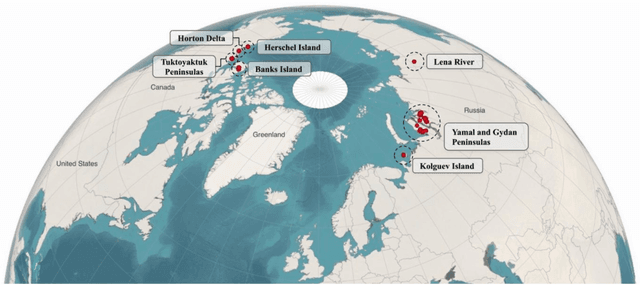
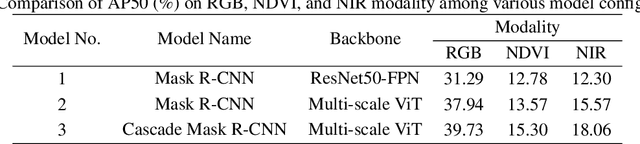
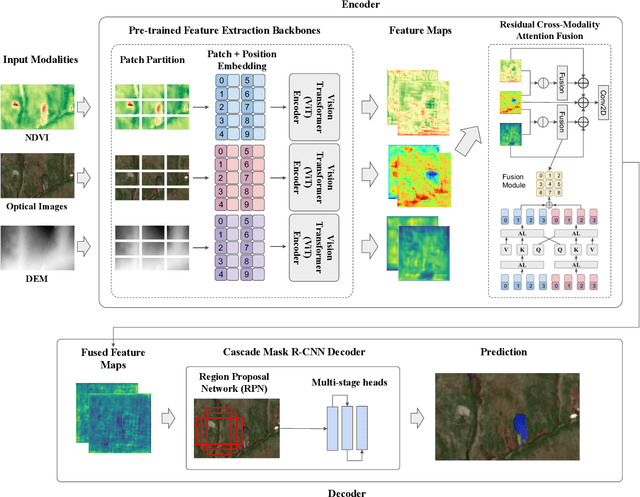
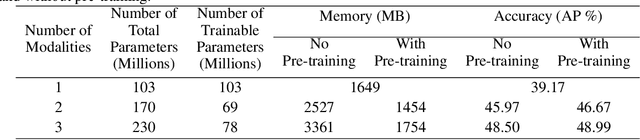
Retrogressive Thaw Slumps (RTS) in Arctic regions are distinct permafrost landforms with significant environmental impacts. Mapping these RTS is crucial because their appearance serves as a clear indication of permafrost thaw. However, their small scale compared to other landform features, vague boundaries, and spatiotemporal variation pose significant challenges for accurate detection. In this paper, we employed a state-of-the-art deep learning model, the Cascade Mask R-CNN with a multi-scale vision transformer-based backbone, to delineate RTS features across the Arctic. Two new strategies were introduced to optimize multimodal learning and enhance the model's predictive performance: (1) a feature-level, residual cross-modality attention fusion strategy, which effectively integrates feature maps from multiple modalities to capture complementary information and improve the model's ability to understand complex patterns and relationships within the data; (2) pre-trained unimodal learning followed by multimodal fine-tuning to alleviate high computing demand while achieving strong model performance. Experimental results demonstrated that our approach outperformed existing models adopting data-level fusion, feature-level convolutional fusion, and various attention fusion strategies, providing valuable insights into the efficient utilization of multimodal data for RTS mapping. This research contributes to our understanding of permafrost landforms and their environmental implications.
Semantic Similarity Measure of Natural Language Text through Machine Learning and a Keyword-Aware Cross-Encoder-Ranking Summarizer -- A Case Study Using UCGIS GIS&T Body of Knowledge
May 17, 2023Initiated by the University Consortium of Geographic Information Science (UCGIS), GIS&T Body of Knowledge (BoK) is a community-driven endeavor to define, develop, and document geospatial topics related to geographic information science and technologies (GIS&T). In recent years, GIS&T BoK has undergone rigorous development in terms of its topic re-organization and content updating, resulting in a new digital version of the project. While the BoK topics provide useful materials for researchers and students to learn about GIS, the semantic relationships among the topics, such as semantic similarity, should also be identified so that a better and automated topic navigation can be achieved. Currently, the related topics are either defined manually by editors or authors, which may result in an incomplete assessment of topic relationship. To address this challenge, our research evaluates the effectiveness of multiple natural language processing (NLP) techniques in extracting semantics from text, including both deep neural networks and traditional machine learning approaches. Besides, a novel text summarization - KACERS (Keyword-Aware Cross-Encoder-Ranking Summarizer) - is proposed to generate a semantic summary of scientific publications. By identifying the semantic linkages among key topics, this work provides guidance for future development and content organization of the GIS&T BoK project. It also offers a new perspective on the use of machine learning techniques for analyzing scientific publications, and demonstrate the potential of KACERS summarizer in semantic understanding of long text documents.